← Back
Harnessing Artificial Intelligence to Better Understand Ocean Winds: The ESAWAAI Project
Understanding wind patterns over the ocean is crucial for many domains, from marine weather forecasting and climate research to optimizing offshore wind energy. As a result, the European Space Agency (ESA), to push the boundaries of current capabilities, has funded the Explainable SAR measurements for Wind Assessment with Artificial Intelligence (ESAWAAI) project. ESAWAII was developed under the guidance of ESA Φ-lab.
ESAWAAI brings together cutting-edge expertise in Earth observation, radar technology, and artificial intelligence thanks to a consortium.
With more than 20 years of remote sensing experience, CLS is proud to be part of the ESAWAAI consortium that brings together cutting-edge expertise in Earth observation, radar technology, and artificial intelligence alongside leading scientific and technical partners IFREMER (France), Université Polytechnique de Bucarest (Romania), and the DTU Wind and Energy Systems Department at the Technical University of Denmark.
A New Approach to Measuring Winds
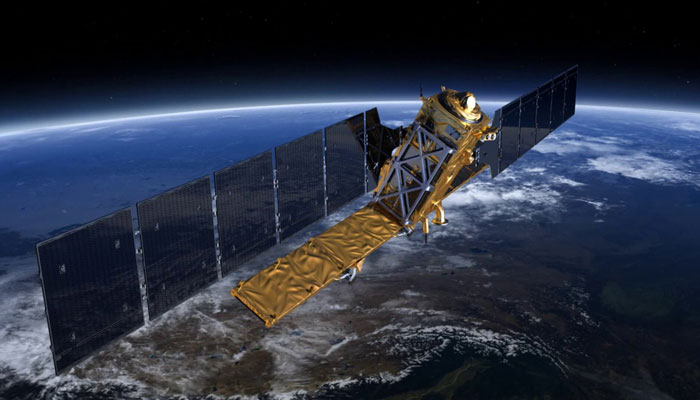
At the heart of the project is the use of Synthetic Aperture Radar (SAR) data, particularly from the Sentinel-1 satellite. SAR provides highly detailed images of the ocean surface, capturing the fine patterns created by winds and waves. ESAWAAI takes advantage of the most advanced SAR acquisition mode, Single-Look Complex (SLC) multi-polarization data, to better characterize these dynamics.
The innovation lies in combining this wealth of SAR information with the latest techniques in artificial intelligence (AI) and explainable AI (XAI). Instead of relying only on traditional physical models, ESAWAAI develops a comprehensive training database that allows deep learning models to be trained and evaluated. These models can be purely data-driven or hybrid, blending physics with AI. The first version of this database is now openly available on ESA’s EOTDL platform: ESAWAAI Dataset.
Improving Transparency and Accuracy
A major goal of the project is to improve the understanding of the Geophysical Model Function (GMF), which links radar measurements with actual wind parameters. By using explainable AI, ESAWAAI not only seeks to enhance the accuracy of wind estimates but also to make the process more transparent.
Therefore, researchers and end-users can better understand how radar observables relate to physical wind properties. Importantly, the new methods aim to avoid dependency on auxiliary data while still outperforming existing algorithms.
From North Sea Data to Global Applications
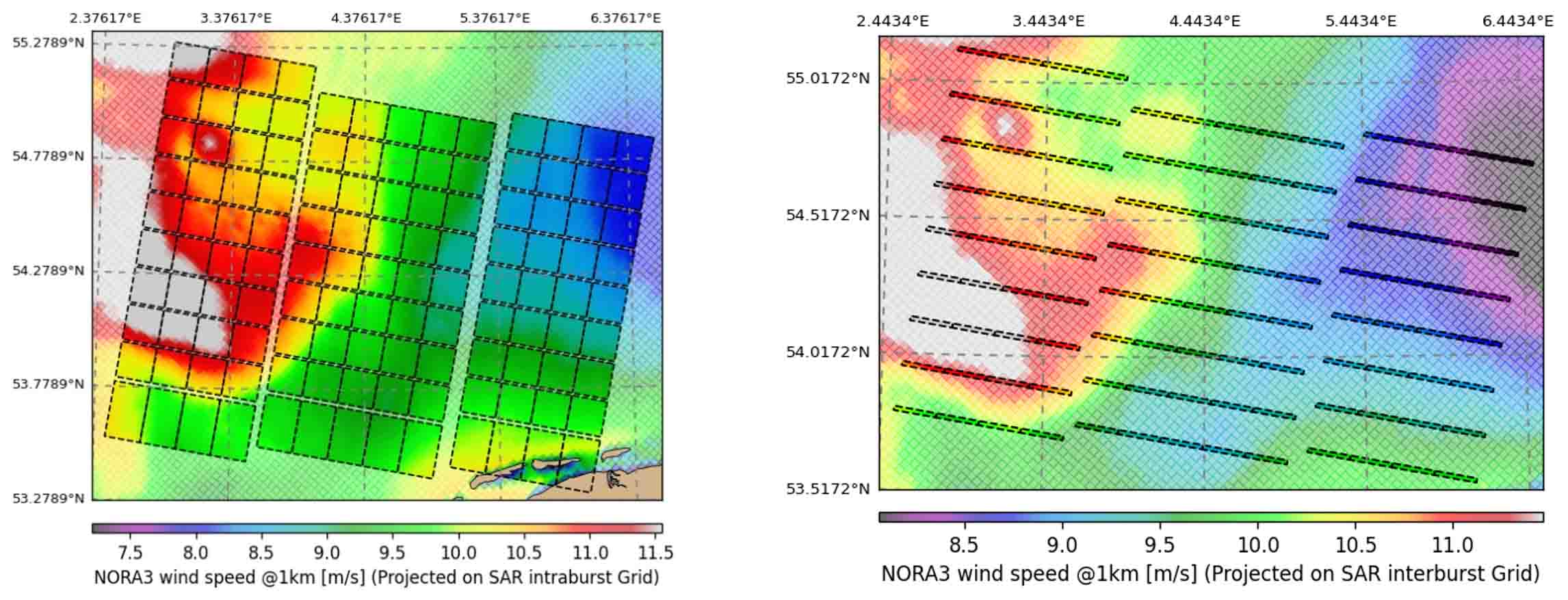
The initial legacy dataset focuses on the NORA3 region, centered on the North Sea, an area of strategic importance for offshore wind development and marine studies. It brings together SAR Single Look Complex (SLC) data from the SARWAVE project, operational Level 2 (L2) SAR variables (OCN), and weather forecast outputs from the NORA3 model.
To maximize usability, the legacy dataset has been carefully structured into small, manageable tiles. Thus making it easier to train and validate deep learning models for analyzing both wind and ocean wave patterns, thereby offering a powerful tool for researchers and industry alike.
Unlocking New Opportunities
By combining the strengths of SAR Earth observation, artificial intelligence, and explainable methods, ESAWAAI opens new perspectives across multiple domains. In marine meteorology, it will contribute to more reliable forecasts that improve navigation and safety. For climate science, it provides deeper insights into how winds interact with climate systems. Regarding the energy sector, it offers enhanced capabilities for assessing offshore wind resources and optimizing wind farm operations.
Through this work, ESAWAAI aims to pave the way toward more robust, transparent, and effective use of satellite data for both science and society.
A European Collaboration
The ESAWAAI project is driven by a strong partnership between leading scientific and technical institutions: CLS (France), IFREMER (France), the Université Polytechnique de Bucarest (Romania), and the Technical University of Denmark (DTU). The European Space Agency (ESA) plays a central role in funding and supporting the initiative, ensuring its integration into Europe’s strategic Earth observation programs.
At CLS, we are proud to contribute our expertise in satellite-based solutions to this project. By working alongside world-class partners, we are helping to advance the use of artificial intelligence and Earth observation for more transparent, accurate, and impactful ocean monitoring.

About CLS
With over 20 years of expertise in SAR Earth observation for wind monitoring, CLS provides high-resolution offshore wind data through our SARWind solution. Paired with our certified floating DeepCLiDAR buoy, we offer a complete and reliable picture of offshore wind resources, from long-term statistics to real-time measurements, empowering the renewable energy sector worldwide.
About ESA
The European Space Agency (ESA) is Europe’s gateway to space. Its mission is to shape the development of Europe’s space capability and ensure that investment in space continues to deliver benefits to the citizens of Europe and the world. ESA is an international organisation with 23 Member States. By coordinating the financial and intellectual resources of its members, it can undertake programmes and activities far beyond the scope of any single European country. ESA’s 23 Member States are Austria, Belgium, Czech Republic, Denmark, Estonia, Finland, France, Germany, Greece, Hungary, Ireland, Italy, Luxembourg, the Netherlands, Norway, Poland, Portugal, Romania, Slovenia, Spain, Sweden, Switzerland and the United Kingdom. Slovakia, Latvia and Lithuania are Associate Members. Canada takes part in some projects under a cooperation agreement. Four other EU states have Cooperation Agreements with ESA: Bulgaria, Croatia, Cyprus and Malta.
About ESA Φ-lab
ESA Φ-lab accelerates the future of Earth Observation (EO) through disruptive and transformational innovation, aiming to strengthen the world-leading competitiveness of the European EO industrial and scientific sectors.